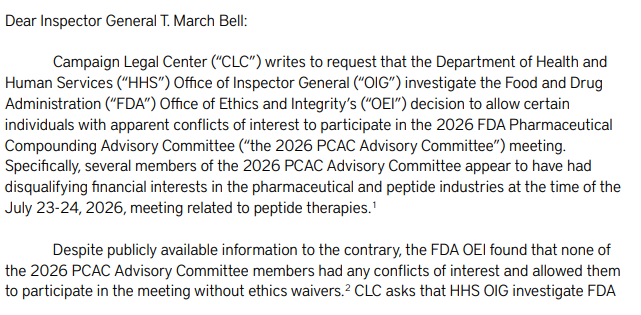
A consumer watchdog group (Campaign Legal Center, or CLC) wrote a letter to the HHS Office of Inspector General (OIG), demanding an investigation of a possible conflict of interest among members of an FDA advisory committee.
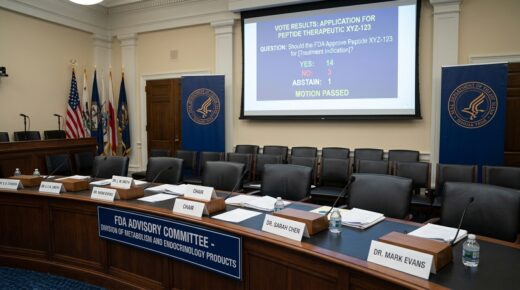
Said committee, called the Pharmacy Compounding Advisory Committee, or “PCAC,” recently recommended the approval of six peptides for compounding and overall manipulation in the pharmaceutical industry.
Campaign Legal Center’s complaint stems from concerns that several key members of PCAC had financial ties to businesses that sell or promote peptides. According to the group, their votes could have been influenced by personal gain, rather than by the advancement of scientific evidence required to push new elements into the FDA’s compounding list.
Among those named were physicians who own or direct wellness practices advertising peptide therapies, including Asare Christian, Gabriel Alizaidy, Kris Wusterhausen, and Melissa Loseke.
What Happens Next
The FDA is not legally required to follow advisory committee recommendations. While it most often does follow said recommendations, this new development could muddy the waters for what’s to come next.
While watchdog groups argue that financial ties may have influenced the vote, supporters of peptide therapy say the compounds represent a growing area of regenerative medicine. Clinics offering treatments like BPC‑157 and TB‑500 claim patients report benefits ranging from faster injury recovery to improved energy.
Advocates argue that compounding access could expand research opportunities and meet patient demand, even as regulators caution that more studies are needed to confirm safety and effectiveness.