
Zealand Pharma (Nasdaq: ZEAL; CPH: ZEAL) is pressing ahead with its DKK 1.3 billion (~USD 190 million) share buyback program, acquiring another 136,000 shares in late August. The move lifts total repurchases to 2.86 million shares worth DKK 868.6 million, or 5.22% of the company’s share capital — a rare show of financial muscle for a biotech built around peptide innovation.
Biotech firms typically consume cash to fund clinical trials, not repurchase stock. Zealand’s ability to return capital while advancing peptide therapies for obesity and metabolic health underscores unusual balance‑sheet strength. Analysts view this as a sign the company can sustain R&D without resorting to shareholder dilution — a confidence marker that sets it apart from smaller peptide players still dependent on equity raises.
Undervaluation and Strategic Timing
The company paid an average of 313–325 DKK per share during week 35, well below recent highs. That timing is deliberate: management appears to be signaling that the market undervalues its peptide portfolio, including late‑stage candidates Petrelintide and Survodutide. Buying millions of shares at these levels effectively tells investors Zealand believes its metabolic‑health pipeline is worth far more than current trading prices suggest.
The buyback program is already two‑thirds complete ahead of its October 31 deadline — just as pivotal Phase 3 trial data approaches. If those results confirm blockbuster potential for Zealand’s weight‑loss peptides, the reduced share count will magnify earnings per share and shareholder returns. In other words, the company is tightening its equity base before the data that could redefine its valuation hits the market.
Market Context and Outlook
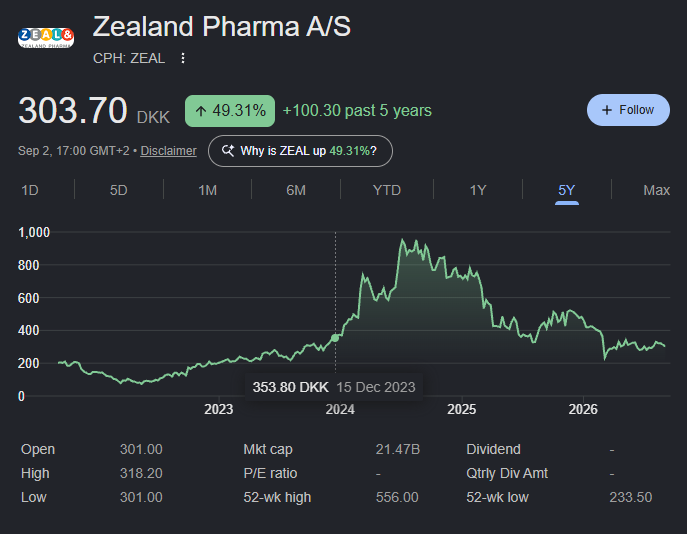
Zealand’s stock has climbed roughly 50% over five years, riding the global boom in wellness and metabolic care, though short‑term volatility remains. The buyback, managed independently by Danske Bank, is designed to stabilize value and project long‑term confidence. For peptide investors, this isn’t just a financial maneuver — it’s a strategic signal that Zealand sees its science as underpriced and its future as far more lucrative than the market currently admits.