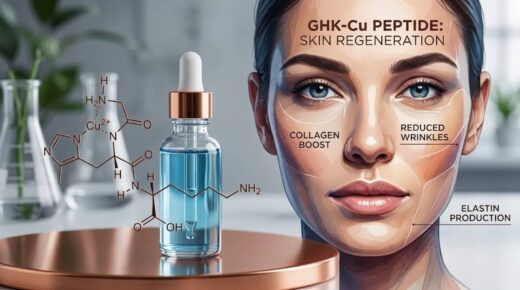
A growing number of people are turning to an experimental anti-ageing compound called copper peptides as an injectable treatment, despite limited evidence on its safety or effectiveness in humans.
The substance, known as GHK-Cu, has been widely used for decades in skincare creams and serums and is linked to claims of reducing wrinkles, improving skin firmness and supporting hair growth. Recently, however, it has gained popularity on social media wellness platforms where users are increasingly injecting it under the skin, often sourced from unregulated online sellers.
Health experts say this shift from topical use to injections is happening faster than the science can support.
Limited evidence for injections
GHK-Cu is not an approved drug, although it has been studied in laboratory and small human trials, mainly focused on skin health. Research suggests it may support collagen production, improve skin elasticity and reduce signs of ageing when applied topically.
“Topical studies have shown improvements in skin thickness and wrinkles,” said dermatology experts quoted in the research literature. Some clinicians say the scientific base for skincare use is “very solid”.
However, there are no published human studies showing that injecting the peptide is safe or more effective than applying it to the skin.
Experts warn that injectable use is spreading through a grey market, where products are bought online without medical supervision or quality control.
Safety concerns and risks
Doctors caution that injecting copper peptides could carry risks including immune reactions, infections, and copper overload in the body. Some clinicians also report patients arriving with elevated liver enzymes and other health concerns after self-injection.
“There is no assurance about what people are actually injecting,” one dermatologist said, adding that the stakes are higher when substances enter the bloodstream directly.
Medical professionals generally advise against injecting the compound until proper clinical trials are completed.
From lab discovery to wellness trend
GHK-Cu was first identified in the 1970s by chemist Loren Pickart, who observed its effects on cell regeneration. Levels of the peptide appear to decline with age, and early studies suggested it may play a role in tissue repair and inflammation control.
Animal research has also indicated possible wider effects, including faster wound healing and potential benefits in models of age-related diseases. However, these findings have not been confirmed in large human trials.
Regulatory uncertainty
The peptide currently sits in a regulatory grey area. In the United States, compounding pharmacies are not generally allowed to sell it for injection, though this may change if regulators revise existing rules.
An advisory panel to the US Food and Drug Administration has recently reviewed several peptides, including GHK-Cu, and is expected to continue discussions on their classification.
Drug developers have shown limited interest in pursuing formal approval, partly because the compound is naturally occurring and difficult to patent, making large clinical trials less commercially attractive.
‘Not a silver bullet’
Clinicians treating patients in wellness clinics say many people who try injectable copper peptides first obtain them online without medical guidance, sometimes later seeking help for side effects.
Doctors say topical forms appear more reliable for skin and hair benefits, while injections show little clear added effect in practice.
Experts caution that while research continues, copper peptides should not be seen as a guaranteed anti-ageing solution.
“I think the jury is still out,” one clinician said. “These peptides are not silver bullets for health.”