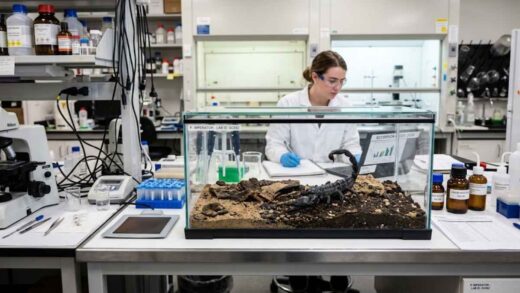
Scorpion venom may sound dangerous, but scientists are now studying it as a possible source of new treatments for liver disease and inflammation.
A recent review published in the journal iLIVER highlights how peptides found in scorpion venom could help target immune responses, fight viruses, and reduce liver damage. While the research is still at an early stage, experts say these compounds show real potential as future drug candidates.
What makes scorpion venom useful?
There are more than 2,700 known scorpion species, and their venom contains a mix of proteins and peptides. Some of these peptides can interact with specific receptors and ion channels in the body, which are key to controlling inflammation and immune activity.
Researchers group these peptides into two main types:
- Disulfide-bridged peptides (DBPs): Stable molecules that can target ion channels linked to immune cells
- Non-disulfide-bridged peptides (NDBPs): Smaller molecules that often interact with cell membranes and inflammatory pathways
These properties make them attractive for treating conditions where the immune system causes damage, including liver disease.
Potential impact on liver disease
Chronic liver conditions—such as fatty liver disease, alcohol-related damage, and cirrhosis—are often driven by long-term inflammation.
In animal studies, one peptide called BmKK2 showed promising results. It helped reduce liver fat, inflammation, and fibrosis in mice by blocking immune pathways linked to tissue damage.
Scientists believe these peptides may interrupt a chain reaction involving immune cells and liver scarring, though more direct human-focused research is still needed.
Fighting viral infections
Some scorpion venom peptides also show antiviral activity. For example:
- Smp76 can block viruses like hepatitis C from entering cells
- Other compounds have reduced replication of hepatitis B in lab tests
This raises the possibility of using venom-derived molecules to support treatments for viral hepatitis, a major cause of liver disease worldwide.
Challenges still remain
Despite the promise, experts say these treatments are far from ready for clinical use.
Key challenges include:
- Difficulty in producing and stabilising peptides
- Short lifespan of the compounds in the body
- Possible immune reactions or side effects
- High cost and complexity of large-scale production
Researchers are now exploring solutions like nanotechnology to improve delivery and artificial intelligence to design better peptide drugs.
What happens next?
So far, most findings come from lab and animal studies. However, there has been some early clinical progress. A therapy using a scorpion-derived peptide has already shown safety in a trial for brain cancer, suggesting these molecules can be used in advanced treatments.
Experts say more research is needed to confirm how effective and safe these peptides are for liver disease in humans.
The bottom line
Scorpion venom peptides offer a surprising but promising path for new treatments targeting inflammation, viral infections, and liver damage. While the science is still developing, future advances in drug design and delivery could bring these unusual compounds closer to real-world use.