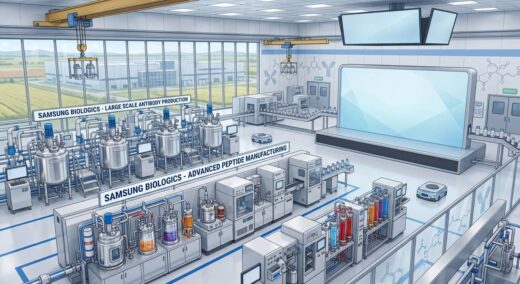
Samsung Biologics has secured a new $262 million manufacturing contract with a European pharmaceutical company, according to a regulatory filing, as the South Korean firm continues expanding into the fast-growing peptide drug market.
The deal will run until the end of 2033, though the identity of the European partner has not been disclosed due to confidentiality agreements.
Big contract, long-term production
Under the agreement, production will take place at Samsung Biologics’ manufacturing campus in Songdo, South Korea. The company confirmed the deal in a securities filing and said confidentiality around the client may end after the contract expires, though this could still change.
The latest agreement adds to Samsung Biologics’ growing portfolio of global manufacturing contracts, which the company says now exceeds $21.9 billion in total value.
Expansion beyond traditional biologics
Samsung Biologics is currently one of the world’s largest contract development and manufacturing organisations (CDMOs), mainly producing biologic drugs such as antibodies and antibody-drug conjugates.
However, the company is now preparing a major shift into peptide therapeutics, including GLP-1-based drugs, which have become increasingly important in diabetes and weight-loss treatments.
As part of that strategy, Samsung has already moved to strengthen its global footprint, including a $280 million acquisition of a GSK facility in the US and plans for additional manufacturing capacity in South Korea.
It has also agreed to a $1.8 billion deal to acquire Swiss CDMO PolyPeptide, a move expected to expand its capabilities in peptide API production across multiple countries.
Growing competition in peptide market
The push into peptides comes as demand for GLP-1 drugs continues to rise globally, driven by their use in diabetes treatment and medically approved weight management.
Industry analysts say major pharmaceutical manufacturers are racing to secure production capacity, as supply constraints remain a challenge despite strong demand.
Samsung Biologics’ latest contract highlights how large pharmaceutical manufacturing groups are positioning themselves for long-term growth in this segment, even as specific product details remain undisclosed.