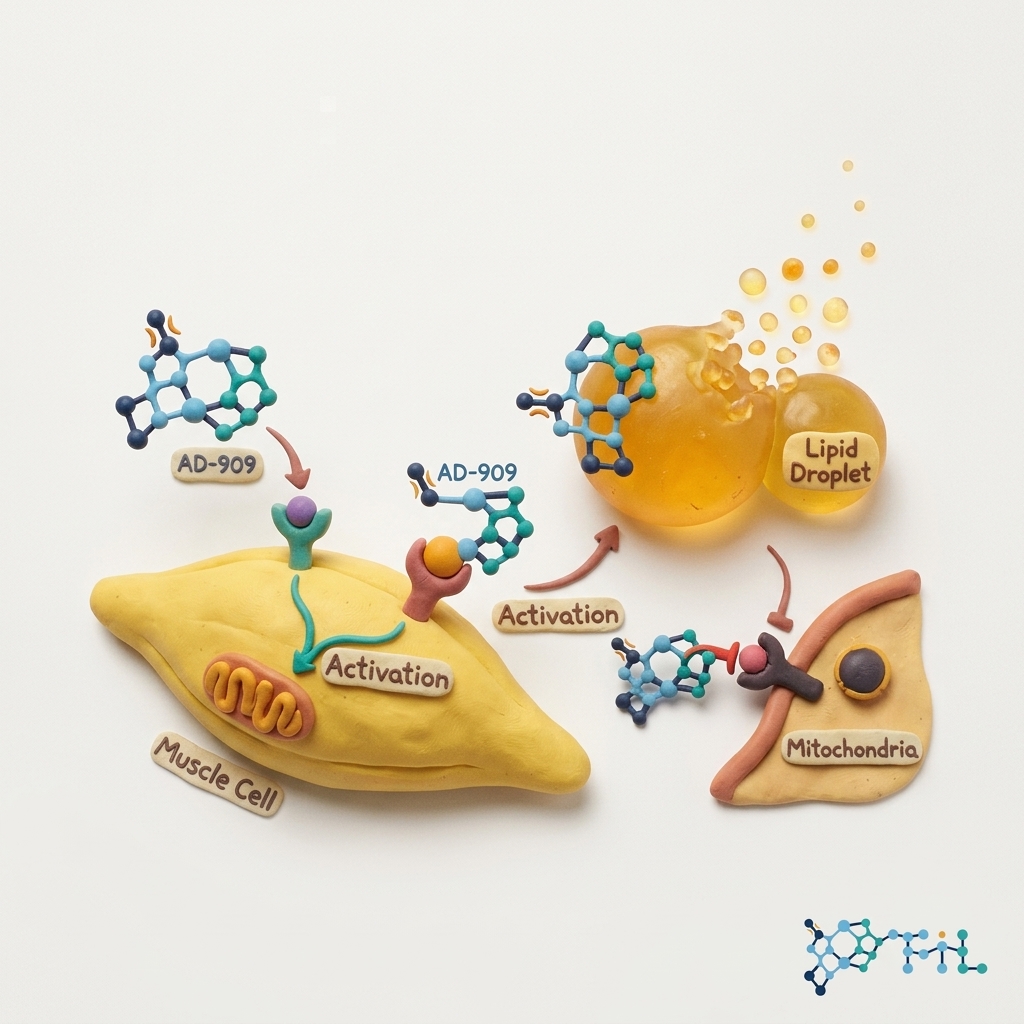
What Is AOD-9604? The Complete Insider’s Guide to the Controversial Fat-Loss Peptide
If you’ve spent any time reading fitness forums, listening to anti-aging podcasts and Youtube influencer vlogs, or speaking with functional medicine doctors about BioHacking techniques over the past few years, you’ve likely heard whispers of the peptide AOD-9604.
Often marketed as the “holy grail” of targeted fat loss, this synthetic peptide is hailed by wellness influencers as a compound that can selectively melt visceral and subcutaneous fat without any of the dangerous hormonal side effects tied to full-length growth hormone.
Yet when you look at the mainstream clinical guidelines and FDA databases, AOD-9604 is not an approved medication like most of the other pepes. In fact, it was swept into regulatory crosshairs and scrutiny alongside other research peptides.
So what is the truth behind AOD-9604? Is it a breakthrough lipolytic secret weapon, an overhyped laboratory relic, or something in between? This is what’s on the mind of most.
Below is a thoroughly investigated breakdown covering who discovered it, the science behind how it works, what researchers have uncovered, its proposed uses, and the clinical realities you need to know.
1. Quick Take: What Exactly Is AOD-9604?
AOD-9604 stands for “Advanced Obesity Drug 9604”.
Chemically, it is a synthetic, 16-amino-acid peptide fragment derived from the terminal tail of the human Growth Hormone (hGH) polypeptide.
Human growth hormone is naturally composed of 191 amino acids. While it stimulates tissue growth, bone lengthening, cellular regeneration, and fat metabolism, taking synthetic full-length hGH comes with severe baggage: insulin resistance, blood sugar spikes, fluid retention, organ enlargement, and elevated IGF-1 (Insulin-like Growth Factor 1) levels.
Researchers asked: Can we isolate only the fat-burning portion of growth hormone while ditching the side effects?
That inquiry created AOD-9604:
- The Sequence: It mimics the C-terminus region (amino acids 177–191) of the hGH molecule.
- The Chemical Modification: Scientists added an extra tyrosine (Tyr) residue at the N-terminus to stabilize the chain and prevent premature metabolic degradation.
- The Resulting Chain: Often cited scientifically as
[Tyr177]-hGH(177-191)orTyr-hGH(176-191).
Full hGH (191 Amino Acids)
└── Residues 1–176: Growth-promoting, IGF-1 activation, insulin antagonism
└── Residues 177–191: Lipid-mobilizing / Lipolytic domain ➔ Cloned & Modified into AOD-9604
Unlike full hGH, AOD-9604 does not bind to growth hormone receptors (GHR), does not raise circulating IGF-1 levels, and does not alter systemic glucose tolerance or provoke diabetic complications.
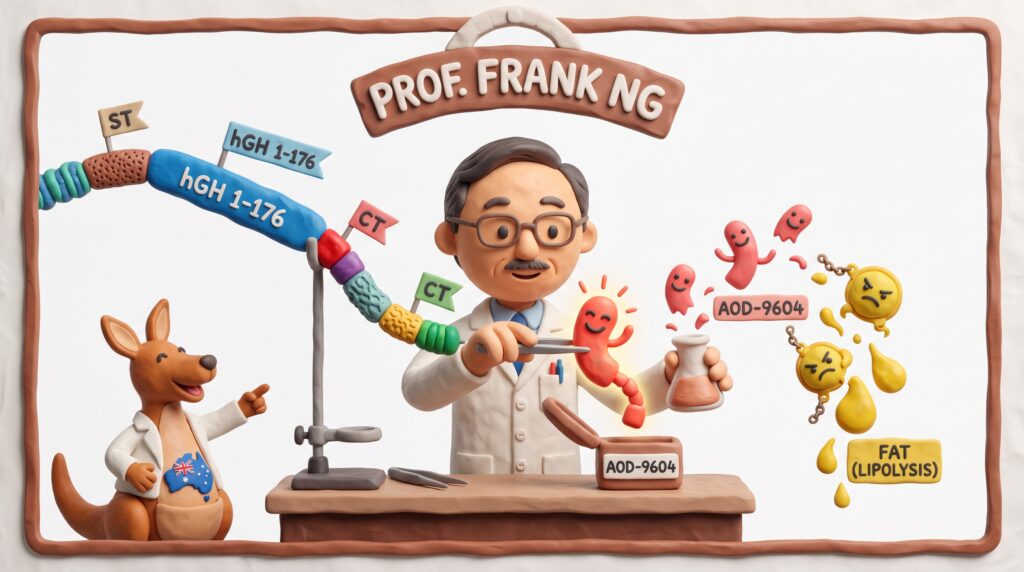
2. Who Discovered AOD-9604? The Australian Origin Story
AOD-9604 was born in Melbourne, Australia, during the late 1990s.
The Pioneer: Professor Frank Ng
The foundational discovery belongs to Professor Frank M. Ng and his biochemistry team at Monash University.
For decades, biochemists had suspected that different domains of the growth hormone molecule were responsible for discrete functions. Professor Ng’s lab conducted systematic mapping of the hGH polypeptide. By cleaving the peptide into distinct fragments, Ng discovered that the lipolytic (fat-mobilizing) actions of growth hormone were localized to residues 177 through 191 on the C-terminal end.
Ng and his colleagues created an analog by adding an N-terminal tyrosine—creating what was initially coded as AOD-9604. Their initial animal trials on genetically obese rodents produced remarkable findings: mice treated with the peptide burned excess body fat, increased lipid oxidation, and reduced adipose mass without disturbing blood sugar or inducing insulin resistance.
Commercial Development: Metabolic Pharmaceuticals Ltd.
Following Monash University’s patenting of the molecule, Australian biotechnology outfit Metabolic Pharmaceuticals Limited licensed the rights to commercialize AOD-9604 in the early 2000s.
Headed by commercial researchers including Dr. Mark Heffernan and Roland Scollay, the company invested tens of millions of dollars into clinical development:
- Phase I Trials: Successfully established tolerability and safety in healthy volunteers.
- Phase IIa Trials: Showed preliminary signals of adipose loss over a 12-week span.
- Phase IIb Trials (The Turning Point): Conducted across hundreds of patients in Australia, Europe, and the US. The Phase IIb trial failed to achieve statistically significant, clinically meaningful weight-loss endpoints compared to placebo when administered as an oral tablet.
Because Metabolic Pharmaceuticals was developing an oral formulation—and oral peptides are notoriously vulnerable to enzymatic degradation in the digestive tract—the commercial clinical trial program for systemic obesity was halted in 2007.
3. How Does AOD-9604 Work in the Body? (Mechanism of Action)
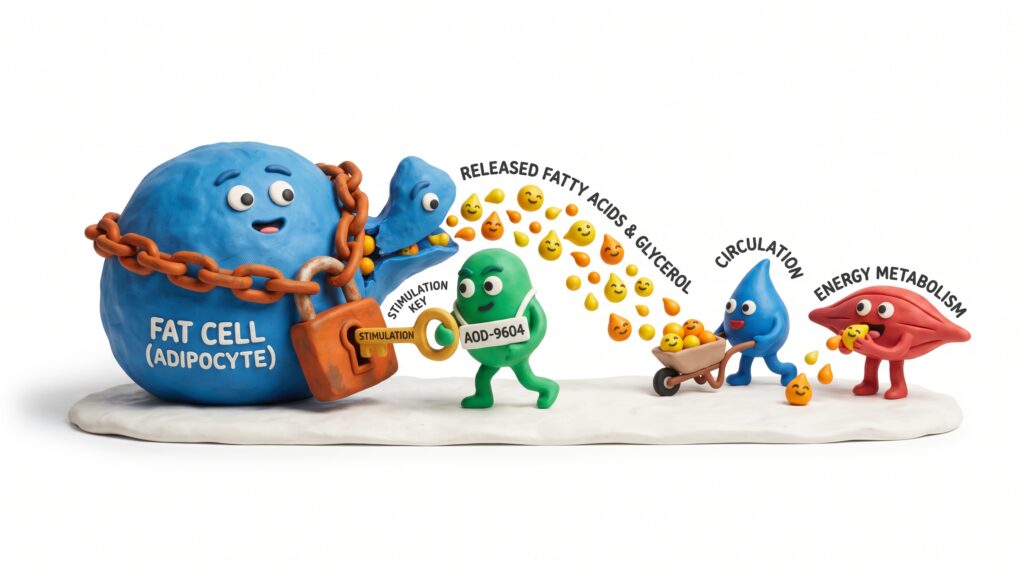
To understand how AOD-9604 works, you must look at the balance between two basic cellular processes: lipolysis (fat burning) and lipogenesis (fat storage).
| Pathway | What It Does | How AOD-9604 Affects It |
| Lipolysis | Breaks down stored intracellular triglycerides into glycerol and free fatty acids. | Stimulates / Accelerates: Triggers hormone-sensitive lipase (HSL) to liberate stored fat from adipocytes. |
| Lipogenesis | Synthesizes fatty acids from carbohydrates and excess calories to store as fat. | Inhibits: Blunts enzymatic conversion of glucose into stored fat droplets. |
| Beta-3 Adrenergic Signaling | Modulates metabolic rate and thermogenesis in adipose tissue. | Modulates: Preclinical trials in β3-knockout mice showed that lipolytic effects rely partly on β3-adrenergic cascades. |
| Growth Hormone Receptor | Stimulates IGF-1 production, cell division, and insulin resistance. | Zero Interaction: Leaves GHR untouched, avoiding acromegaly, water retention, and hyperglycemia. |
The Dual-Action Metabolic Effect
Unlike stimulants (such as caffeine or ephedrine) that force fat loss by spiking the central nervous system and elevating heart rate, AOD-9604 acts at the cellular level within fat tissue.
- Unlocking Stored Fuel: It encourages the fat cell to release its triglyceride stores into the bloodstream as free fatty acids (FFAs) and glycerol.
- Preventing Re-Storage: Concurrently, it reduces the activity of lipogenic enzymes, making it harder for circulating substrates to be packed back into fat pads.
Because the molecule does not bind to hepatic growth hormone receptors, it does not elevate circulating IGF-1 (Insulin-Like Growth Factor 1). This is a major differentiator: high levels of IGF-1 can accelerate tumor proliferation, exacerbate carpal tunnel syndrome, and cause insulin resistance.
4. Key Uses Studied for AOD-9604
While AOD-9604 was initially designed as an anti-obesity pill, subsequent scientific studies branched into other therapeutic applications.
                        ┌── Targeted Adipose / Visceral Fat Loss
                        ├── Glucose-Neutral Body Composition Modulation
    AOD-9604 Uses ───── ├── Cartilage Regeneration & Osteoarthritis Repair
                        └── Athletic Recovery & Tendon Healing (Investigational)
1. Targeted Fat Reduction (Preclinical & Clinical Obesity)
The original and most prominent focus of AOD-9604 has been adipose tissue reduction. In rodent studies published by Heffernan, Ng, and colleagues, obese mice treated with AOD-9604 experienced:
- Significant reductions in visceral abdominal fat.
- Increases in plasma glycerol (proving active lipolysis).
- Reductions in total weight gain without suppressing appetite.
2. Cartilage Repair & Osteoarthritis (OA)
In the 2010s, researchers at the Catholic University of Korea (such as Dr. H.J. Kwon and Dr. J.G. Park) explored whether AOD-9604 could regenerate connective tissue.
Since growth hormone is known to influence cartilage matrix synthesis, researchers investigated whether this isolated fragment could stimulate chondrocytes without causing systemic hormone exposure.
- In rabbit models of osteoarthritis, intra-articular injections of AOD-9604 (both alone and in combination with hyaluronic acid) stimulated chondrocyte proliferation, enhanced proteoglycan matrix deposition, and reduced lameness and joint degradation.
- These findings positioned AOD-9604 as a potential candidate for joint longevity, osteoarthritis, and tendon rehabilitation.
3. Sports Performance and Recovery
AOD-9604 gained notoriety outside the clinic in 2013 when it became the center of a doping controversy in Australia’s AFL (Australian Football League) and NRL (National Rugby League). Athletes and trainers sought the compound for soft-tissue healing and accelerated body recomposition.
The World Anti-Doping Agency (WADA) subsequently clarified that AOD-9604 falls under Section S0 (Non-Approved Substances) and S2 (Peptide Hormones, Growth Factors, and Related Substances), banning it in competitive sports.

5. A Field Reporter’s Perspective: The Clinical Disconnect
Over the past three years, Top researchers have tracked the clinical landscape and surveyed clinicians who consult in metabolic medicine. The sentiment regarding AOD-9604 reveals a stark contrast between laboratory expectations and real-world results:
“On paper, AOD-9604 should be the most prescribed fat-loss compound on the planet,” one physician specializing in functional longevity told me in an interview. “A growth hormone fragment that selectively cleaves triglycerides without touching blood sugar, IGF-1, or insulin? It sounds like modern pharmacology magic. But in the clinic, results vary wildly. For every patient who claims it helped them trim stubborn subcutaneous waist fat, three others notice virtually nothing.”
This parrots what you see across the medical literature per most accounts:
- The Pharmacokinetic Conundrum: The early commercial trials failed because the oral peptide broke down before reaching circulation. Even with subcutaneous delivery, the molecule has an exceptionally short biological half-life (estimated under 30 minutes in plasma).
- The “Low Receptor Occupancy” Reality: Unlike GLP-1 agonists (such as semaglutide or tirzepatide) that suppress appetite and trigger predictable, double-digit weight loss via neural and gastric signaling, AOD-9604 does not alter appetite. It requires an existing caloric deficit to reveal its lipolytic effects.
- Batch Inconsistencies: Because AOD-9604 contains an internal disulfide bridge between its two cysteine residues, proper chemical synthesis and folding are critical. In gray-market settings, misfolded peptides or truncated synthesis artifacts frequently lead to inert products.
6. AOD-9604 vs. Full hGH vs. Semaglutide: How Do They Compare?
To understand where AOD-9604 fits into metabolic therapies, consider how it compares to other weight-loss and growth-hormone protocols:
| Feature / Metric | AOD-9604 | Full Human Growth Hormone (hGH) | Semaglutide (GLP-1 RA) |
| Molecule Class | 16-AA Modified Peptide Fragment | 191-AA Pituitary Polypeptide | GLP-1 Receptor Agonist |
| Primary Mechanism | Stimulates adipocyte lipolysis; blocks lipogenesis | Binds GHR, drives IGF-1, stimulates systemic tissue growth | Delays gastric emptying, suppresses central appetite, boosts insulin |
| Impact on Blood Sugar | Neutral (No change in fasting glucose or insulin) | Negative (Causes insulin resistance & hyperglycemia) | Positive (Lowers HbA1c & fasting glucose) |
| Elevates IGF-1? | No | Yes (Dose-dependent) | No |
| Appetite Suppression | None | Minimal to none | Extreme (Primary mechanism) |
| FDA Status | Investigational / Unapproved Drug | FDA Approved (Deficiency, Turner’s, Cachexia) | FDA Approved (Type 2 Diabetes, Obesity) |
| Average Human Weight Loss | Modest / Inconsistent | Moderate (Body recomposition) | High (15–20% total body mass) |
7. Current Regulatory Status and FDA Scrutiny
Anyone researching AOD-9604 must understand its evolving legal and regulatory standing.
- FDA Investigational Status: AOD-9604 is not FDA-approved for human treatment of obesity, osteoarthritis, body recomposition, or any clinical condition.
- Compounding Pharmacy Directives (503A / 503B): In late 2023 and early 2024, the US FDA Pharmacy Compounding Advisory Committee (PCAC) re-evaluated several peptide bulk substances. AOD-9604 was moved off Category 1 compounding bulk lists due to concerns regarding immunogenicity risks, chemical characterization, and insufficient human clinical trial safety validation. As a result, compliant US compounding pharmacies can no longer legally dispense AOD-9604.
- The “GRAS” Designation: You may see vendors claim that AOD-9604 is “FDA Approved via GRAS.” This is misleading. In the late 2000s, AOD-9604 was granted GRAS (Generally Recognized As Safe) status strictly for limited use as a nutritional food ingredient at very low, non-therapeutic doses. This status does not constitute pharmaceutical approval for injection, therapeutic obesity treatment, or medical therapy.
8. Safety Profile, Potential Side Effects, and Caveats
Human clinical trials from the early 2000s, encompassing roughly 900 participants, documented a generally favorable acute tolerability profile. However, “tolerable” does not mean entirely risk-free.
Reported Adverse Events:
- Injection-site reactions (erythema, localized pain, swelling)
- Mild headaches and transitory dizziness
- Mild gastrointestinal disturbances (nausea, mild diarrhea)
- Temporary palpitations or chest tightness (rare, noted in Phase II surveys)
Key Caveats:
- Immunogenicity Concerns: Because synthetic peptides can contain slight sequence errors or aggregate in solution, repeated administration can prompt the host immune system to produce anti-drug antibodies (ADAs). The long-term physiological impact of these antibodies remains uncharacterized in humans.
- Lack of Phase III Data: There has never been a completed Phase III clinical study demonstrating long-term safety, sustained weight reduction, or cardiovascular outcomes in human populations.
- Purity Pitfalls: Because the peptide is available primarily as an unapproved research chemical, unregulated sources often lack cGMP manufacturing validation, third-party sterility testing, or endotoxin analysis.
9. Frequently Asked Questions (FAQ)
Does AOD-9604 make you lose weight without dieting?
No. AOD-9604 does not suppress appetite or dramatically elevate basal metabolic rate. In preclinical studies, it facilitated the mobilization of stored lipids, meaning fat oxidation still required an underlying energy deficit. Without a caloric deficit, mobilized fatty acids are simply recycled and re-esterified into adipose tissue.
Is AOD-9604 the same as Fragment 176-191?
They are nearly identical, but with one chemical difference. Standard hGH Fragment 176-191 consists of amino acids 176 through 191 of human growth hormone. AOD-9604 is residues 177–191 with an additional tyrosine amino acid added to the N-terminal end to increase stability and shelf-life. In the fitness world, the two terms are often used interchangeably, but AOD-9604 is the stabilized, patented analog.
Will AOD-9604 cause water retention or numb hands like growth hormone?
Generally, no. The water retention, carpal tunnel syndrome, and joint swelling associated with recombinant hGH stem from growth hormone receptor activation and downstream IGF-1 spikes. AOD-9604 bypasses the growth hormone receptor entirely and does not elevate IGF-1.
Can AOD-9604 be detected on athletic drug tests?
Yes. WADA specifically lists growth hormone releasing factors and growth hormone fragments under sections S0 and S2 of its prohibited list. High-resolution mass spectrometry can detect AOD-9604 and its metabolites in urine and blood samples.
10. The Bottom Line: What’s the Verdict on AOD-9604?
AOD-9604 represents a fascinating chapter in molecular endocrinology. Professor Frank Ng and the researchers at Monash University proved that the complex, diverse actions of a 191-amino acid hormone could be dissected down to a specific 16-amino acid sequence.
Here is where the peptide stands today:
- The Scientific Promise: AOD-9604 accelerates lipolysis, inhibits lipogenesis, and exhibits potential chondroprotective properties for cartilage health without disturbing glucose homeostasis or elevating IGF-1.
- The Practical Reality: Oral formulations failed clinical trials, injected formulations remain unapproved drugs, and real-world human responses are substantially more modest and unpredictable than popular wellness claims suggest.
- The Current Status: It is not an FDA-approved prescription medication, and recent regulatory changes have removed it from legal compounding pharmacy channels in the United States.
If you are evaluating metabolic therapies for weight management or recovery, consult a qualified, licensed medical provider. While AOD-9604 continues to serve as an intriguing research tool in the study of adipocyte biology, modern medicine has developed far more validated, clinically proven options for systemic metabolic health.
Popular AOD-9604 questions & Topics
|
AOD-9604 Oral vs. Subcutaneous injections: which is better?
7 views
|
|
| Explore All Articles and Listicles covering Popular AOD-9604 Topics & Searches | |