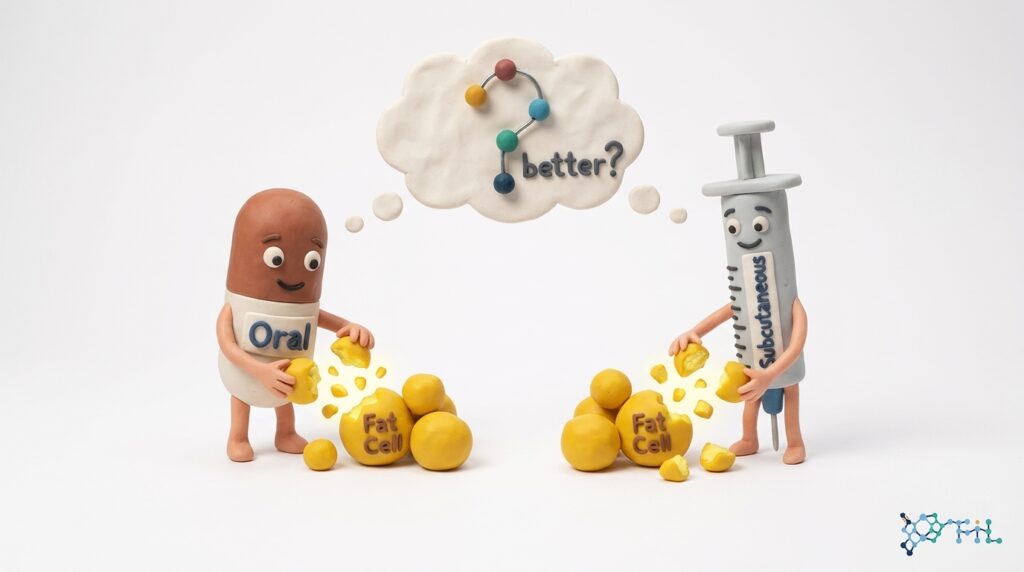
When evaluating AOD-9604, one of the most contentious debates centers on administration: oral tablets vs. subcutaneous injections. While oral administration sounds far more appealing than a daily needle prick, the biological and clinical reality tells a different story.
If systemic bio-availability and predictability are the primary goals, subcutaneous injection is overwhelmingly considered superior.
The Bio-availability Hurdle: Why Oral Peptides Struggle
Peptides are chains of amino acids, and your gastrointestinal tract treats them just like protein from food.
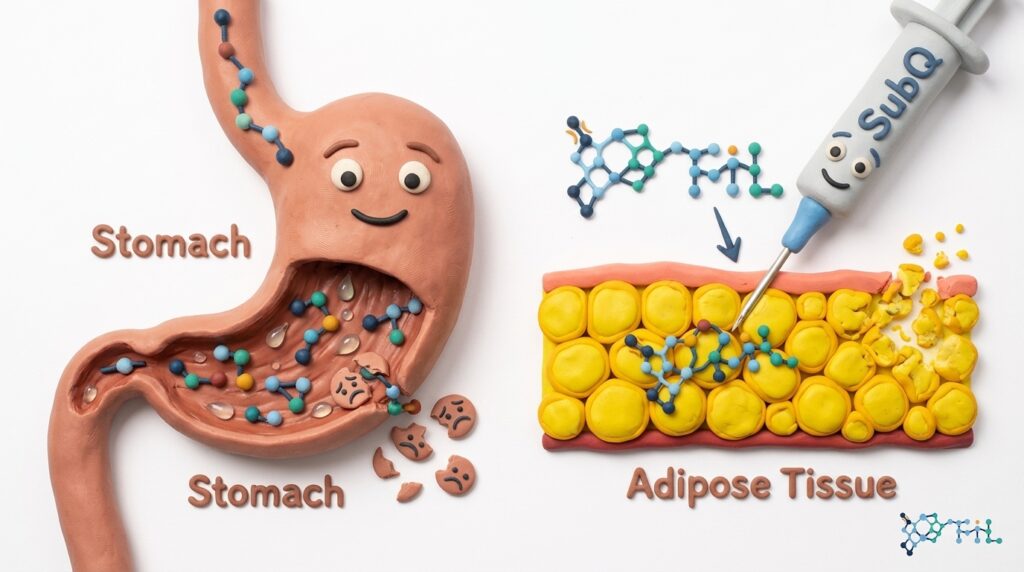
When you ingest AOD-9604 orally, it encounters a gauntlet of gastric acid, digestive enzymes (pepsin, trypsin, chymotrypsin), and first-pass hepatic metabolism. Because peptides are hydrophilic and relatively large, very little survives enzymatic breakdown to cross the intestinal wall into systemic circulation intact.
- Estimated oral bio-availability: Typically under 1% to 3% for unformulated oral peptides.
- The commercial fallout: Metabolic Pharmaceuticals originally pursued an oral tablet formulation. Their landmark Phase IIb clinical trial, which enrolled over 500 patients on oral doses, failed to show statistically significant weight loss over a placebo. Many researchers largely attributed this failure to erratic absorption and poor oral bioavailability.
Subcutaneous Injection: Direct Systemic Delivery
Subcutaneous (SubQ) administration bypasses the entire digestive tract by delivering the peptide directly into the fatty layer beneath the skin.
- Near-complete systemic uptake: By avoiding stomach acid and hepatic first-pass metabolism, SubQ delivery yields far higher plasma concentrations and a more predictable absorption curve.
- Peak concentration: SubQ injections typically achieve peak plasma levels within 30 to 60 minutes.
- Targeted utilization: Because intact molecules enter the capillary bed directly, adipocytes receive higher exposure to active AOD-9604 before endogenous proteases degrade it.
Direct Comparison: Oral vs. Subcutaneous
| Metric | Subcutaneous Injection | Oral (Capsules / Tablets) |
| Bio-availability | High and consistent | Very low; subject to digestion |
| Dosing Predictability | Reliable plasma absorption | Highly variable across individuals |
| Convenience | Requires needles, reconstitution, and cold storage | Non-invasive swallowable pill |
| Clinical Trial Precedent | Supported in animal & tissue studies | Failed primary endpoints in human Phase IIb |
| Risk Profile | Mild injection-site redness/bruising | Gastrointestinal upset, minimal systemic effect |
Why Are Oral Versions Still Sold?
If oral delivery is so inefficient, why do oral capsules and sublingual troches flood online research sites?
- Market demand for non-invasive products: The barrier to entry for self-injection is high; casual consumers prefer pills.
- Regulatory gray areas: Supplement and research vendors often market oral versions under loose dietary-ingredient premises to sidestep compounding scrutiny.
- Sublingual alternatives: Some vendors compound troches or drops designed to absorb through mucosal membranes under the tongue, but published human pharmacokinetic aka ADME trials demonstrating systemic efficacy for AOD-9604 troches remain virtually nonexistent.
So which is better in the end of the two types of intake?
From a strictly pharmacological perspective, subcutaneous injection is the better, more effective route.
Oral ingestion exposes the fragile 16-amino-acid chain to enzymatic destruction before it can stimulate fat oxidation in target tissues. Unless paired with proprietary permeation enhancers or advanced protective nanocarriers, oral AOD-9604 yields negligible systemic exposure. For researchers seeking measurable, predictable physiological effects, subcutaneous delivery remains the standard protocol.
Most Popular AOD-9604 Topics on Peptides TIL today:
|
AOD-9604 Oral vs. Subcutaneous injections: which is better?
7 views
|
|
| Explore All Articles and Listicles covering Popular AOD-9604 Topics & Searches | |