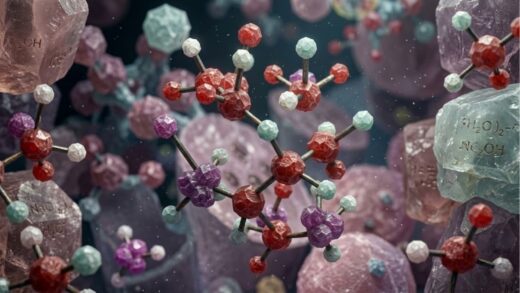
An artificial intelligence system that can identify and explain the molecules responsible for the savoury “umami” taste has been developed by researchers in China, offering a potential breakthrough for the food industry.
The system, called BioPP-GFD, can distinguish between umami and bitter peptides with more than 93% accuracy. Unlike earlier models, it can also show which chemical features influence its decisions, giving scientists clearer insight into how flavour works at a molecular level.
Umami, often described as a rich or savoury taste, is commonly linked to glutamate. However, short chains of amino acids known as peptides can also create or enhance this flavour. Identifying these peptides has traditionally been slow and costly, requiring multiple laboratory steps and taste testing.
The new AI model aims to speed up this process. It analyses peptides in three different ways at once: as molecular structures, chemical fingerprints, and overall physical properties. These combined views allow the system to make more accurate predictions and explain them in chemical terms.
To test the model, researchers used a dataset of 719 peptides, split almost evenly between umami and bitter types. In trials, the system correctly identified most of them and outperformed several existing AI approaches, including transformer-based models.
The study also found that certain chemical features—such as acidic groups and oxygen-rich regions—play a key role in producing the umami taste. These findings match previous biological research on how peptides interact with the human taste receptor known as T1R1/T1R3.
Researchers say this interpretability is a major advance. Many earlier AI systems could predict taste but offered little explanation, limiting their usefulness for designing new ingredients.
The team believes the technology could help develop “clean-label” flavour enhancers, which improve taste without adding extra salt or artificial additives. This could be especially valuable for plant-based foods and processed proteins, where flavour is often a challenge.
However, the scientists caution that the model predicts taste based on data rather than direct human testing. Further experimental validation will be needed before the results can be widely applied in food production.
Even so, the researchers say their approach could significantly reduce the time needed to discover new flavour compounds, opening the door to more efficient and targeted food design in the future.