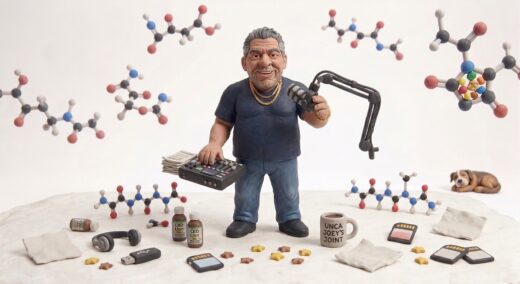
Comedian Joey Diaz isn’t shy about sharing what’s working for him. On a recent podcast, he dropped a few names from the peptide world, saying: “There’s some peptides I don’t believe in at all, but there are some peptides that do a great job. I’m taking that Matzi and I’m starting to feel a little better from that. And that’s for your cells and it helps with weight and fatness and obesity and diabetes.”
So what exactly are these compounds he’s talking about? Let’s break them down.
MOTS‑c (“Matzi”)
MOTS‑c is a mitochondrial‑derived peptide being studied for metabolism and diabetes. A foundational study published in Cell Metabolism reports that MOTS-c regulates metabolic homeostasis and can prevent age-dependent and high-fat diet-induced insulin resistance. According to a comprehensive review in Frontiers in Endocrinology, early animal research suggests it can improve insulin sensitivity and energy balance by acting as a “motion simulator.” However, it’s important to note that MOTS‑c is experimental — not FDA‑approved for human use — and it is strictly banned by the World Anti-Doping Agency (WADA) for athletes. Diaz’s anecdote reflects the current wellness buzz, but regulators still classify it as an investigational drug.
NAD⁺
Diaz also mentioned NAD, though technically it’s not a peptide but a coenzyme. NAD⁺ is essential for cellular energy and DNA repair, and levels decline with age. Supplements that boost NAD are being studied for longevity and recovery, but clinical evidence is highly nuanced. As outlined in a Journal of Biomedical Science review, while animal data on NAD+ extension of healthspan is extensive, human clinical outcomes are inconsistent. Recent systematic evaluations, such as those aggregated by HeliMeds Clinical Reviews, note that while oral precursors alter blood biomarkers, there are no eligible clinical-outcome trials establishing intravenous or intramuscular NAD+ as an effective wellness treatment. Still, its popularity shows how molecules once confined to biochemistry labs are now part of everyday wellness talk.
PT‑141
With his trademark bluntness, Diaz joked: “PT‑141. If you want a hard-on, whatever you want, you could get.” PT‑141, or bremelanotide, is a synthetic peptide that actually has genuine regulatory backing. As noted in pharmacy guidelines hosted on ExcelMale, it is FDA‑approved under the brand name Vyleesi for hypoactive sexual desire disorder (HSDD) in premenopausal women. Unlike traditional medications that target blood flow, it operates by stimulating melanocortin receptors in the central nervous system. It’s frequently used off‑label for men with erectile dysfunction, though that’s not its official indication. This dual identity — approved for one use, hyped for another — is common in the peptide world.
GHK‑Cu
Finally, Diaz referenced “GHU, Q U, whatever the [expletive] it is.” He’s likely talking about GHK‑Cu, a naturally occurring, copper‑binding tripeptide highly popular in skincare. Extensive cellular data published in the International Journal of Molecular Sciences show that GHK-Cu accelerates wound healing, skin repair, and stimulates collagen synthesis by dermal fibroblasts. A recent 2024 analysis in Pharmaceutics notes its profound localized antioxidant and anti-inflammatory properties. However, large‑scale clinical trials demonstrating systemic, injectable anti‑aging effects in humans are severely lacking. For now, its proven efficacy remains in cosmetics and topical tissue regeneration rather than systemic medicine.
The Bigger Picture
Diaz’s casual commentary captures the mainstreaming of peptides. Some, like PT‑141, are FDA‑approved; others, like MOTS‑c, remain experimental. NAD⁺ isn’t even a peptide, but its inclusion shows how wellness culture blends genuine biochemistry and marketing hype.
But overall, several celebrities like Diaz and even UFC boss Dana White are turning to Peptides for wellness.
Disclaimer: This article is for informational purposes only and not medical advice. Peptides and related compounds should only be used under professional medical guidance.