
A new analysis from DelveInsight highlights growing momentum in the clinical trial pipeline for multiple system atrophy (MSA), a rare and rapidly progressive neurodegenerative disorder. More than 22 companies are advancing 24 investigational therapies, spanning late‑stage monoclonal antibodies, oral small molecules, cell replacement strategies, and even peptide‑based approaches.
MSA, classified as an atypical Parkinsonian disorder, is marked by motor impairment, autonomic dysfunction, and the abnormal accumulation of alpha‑synuclein protein in glial cells. With no approved disease‑modifying therapy, current management focuses on symptom relief. The report suggests that the pipeline is shifting toward treatments that directly target disease biology, including alpha‑synuclein inhibitors, neuroprotective agents, and regenerative modalities.
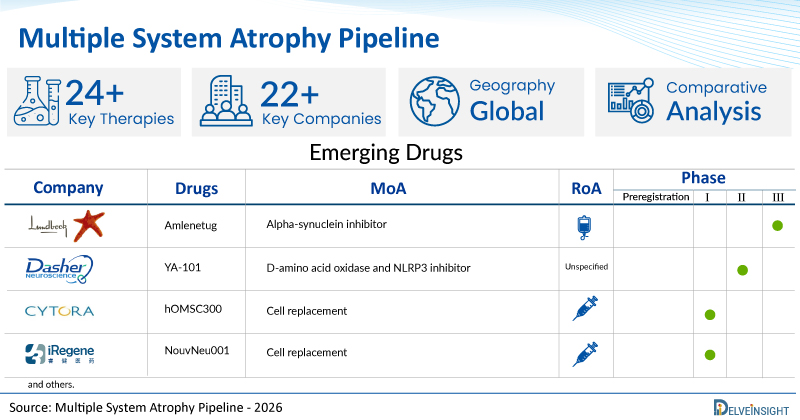
Among the most advanced candidates is Amlenetug, an intravenous monoclonal antibody from H. Lundbeck targeting alpha‑synuclein, now in Phase III trials. Other notable programs include TEV‑56286 (Teva Pharmaceuticals), which has received FDA Fast Track designation, and ATH434 (Alterity Therapeutics), moving into registrational Phase III development. Early‑stage innovation is equally diverse, with cell replacement therapies such as hOMSC300 and NouvNeu001, and gene therapy approaches like AAV2‑GDNF.
For peptide readers, the report is significant because it explicitly lists peptides as one of the molecule types under development. While most headline candidates are antibodies or small molecules, peptide‑based therapeutics are part of the broader mix, reflecting the versatility of peptides in neurodegenerative research. As Stuti Mahajan of DelveInsight noted, the pipeline is “increasingly diversified,” with next‑generation alpha‑synuclein inhibitors and regenerative strategies expected to reshape the treatment landscape.
With approximately 10 therapies already in mid‑to‑late stages, the MSA field is poised for a transition from symptomatic care to disease‑modifying treatments. For peptide science, the inclusion of peptide modalities in this pipeline underscores their growing role in tackling complex neurological diseases.