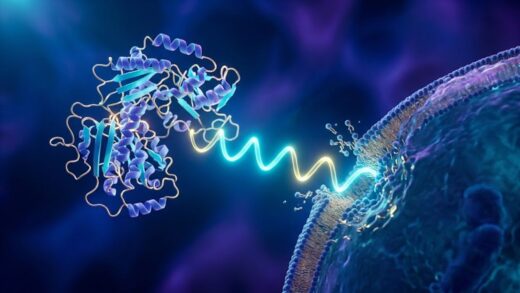
Scientists have revived ancient proteins that could help in the fight against drug-resistant infections, according to new research from the University of Oregon.
The team reconstructed antimicrobial proteins dating back up to 160 million years and found that some of them were more effective at killing harmful bacteria than modern versions of the same molecules.
The study, published in PLOS Biology, focused on lactoferrin, an immune protein found in mammals. Researchers used evolutionary data to rebuild ancient versions of the protein and test how they performed against bacteria linked to human disease.
In lab experiments, the resurrected peptides were tested against several pathogens, including E. coli, Staphylococcus aureus and Pseudomonas aeruginosa. Some of the older versions were able to damage bacterial membranes more effectively than current human equivalents.
Scientists say the findings could help guide future drug development at a time when antibiotic resistance is becoming a major global health threat. Instead of relying only on existing antibiotics, researchers believe evolution itself could offer new starting points for treatment design.
Lead researcher Matt Barber said evolution acts like a “billions-year-long experiment”, helping scientists identify what biological tools worked best in the past and how they might be improved for modern medicine.
However, the researchers also warned that these ancient peptides are not ready to become drugs yet. They break down quickly in the body and are less stable than standard antibiotics, meaning more development is needed before they can be used in real treatments.
Even so, the team says understanding how these antimicrobial systems evolved could help scientists design new therapies that bacteria find harder to resist.