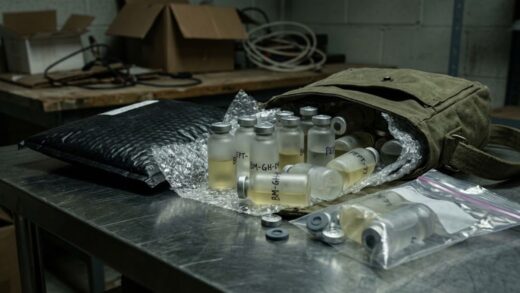
Doctors in Australia are warning that a possible contaminated batch of counterfeit peptides may be linked to a series of serious liver injuries, after a seventh patient was hospitalised with acute liver toxicity.
The cases involve people who had taken unapproved peptides sold on the black market, including products labelled as retatrutide, a weight-loss compound currently only available in clinical trials.
Medical specialists say the patients developed severe liver damage within weeks of use, raising concerns about the safety of illicit products being widely promoted online.
Possible “batch problem” under investigation
Liver transplant specialist Dr Marie Sinclair, who has treated several of the patients in Victoria, said one recent case showed a similar pattern to earlier hospitalisations.
She said one explanation could be a contaminated batch of counterfeit retatrutide circulating locally, although testing results are still pending.
“It’s uncertain as to why this has happened,” she said. “One possibility is that there could be a contaminated batch … but we don’t have testing results to support that yet.”
Dr Sinclair said she had arranged laboratory testing of the products linked to affected patients.
Serious symptoms reported
Doctors said patients developed symptoms of acute liver injury, including jaundice, within a short period after taking the substances.
“They may become yellow or jaundiced … and they can become very unwell,” Dr Sinclair said.
She warned that the problem is likely to continue if unregulated peptide products remain widely available.
Regulators raise concerns over counterfeit drugs
Australia’s Therapeutic Goods Administration (TGA) has also raised concerns about the cluster of cases.
Its chief medical advisor, Professor Robyn Langham, said the pattern of illness suggested a possible issue with a specific batch of product.
“We are seeing reports of acute liver failure which might be related to some batch issues,” she said.
However, she stressed that all unapproved peptides carry risks, and none can be considered safe.
“The risks are real, they are not theoretical,” she said.
Growth of unregulated peptide market
Peptides are short chains of amino acids that can influence biological processes in the body. Regulated peptide medicines include insulin and GLP-1 drugs used for diabetes and weight loss.
However, health authorities say there has been a rise in unapproved and counterfeit peptides promoted through social media and wellness clinics, often marketed for fat loss, anti-ageing, or muscle growth.
The TGA says more than 94,500 unapproved peptide products have been destroyed this year, alongside major seizures of illegal steroid and peptide supplies.
Officials have also warned that young people are increasingly exposed to these products online and may be injecting them without understanding the risks.
Pharmaceutical warning
US drug company Eli Lilly, which holds the patent for retatrutide and is conducting clinical trials, has warned against counterfeit versions.
It said any product sold online under the same name is unapproved and unsafe.
Ongoing investigation
Health authorities across Australia are continuing to investigate cases of liver toxicity linked to unregulated peptide use.
Doctors say further testing of seized and suspected counterfeit batches is underway to determine whether contamination or manufacturing issues are responsible.