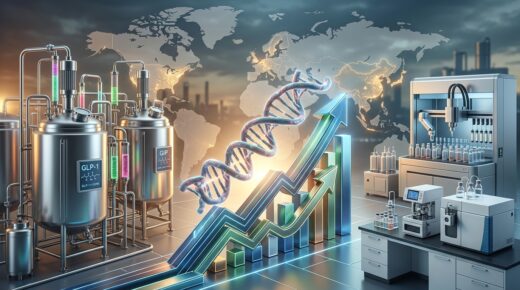
The global peptide synthesis market is entering a period of rapid expansion, driven by surging demand for GLP‑1 and GIP receptor agonists used in diabetes and obesity treatment. According to a new industry outlook, the market is projected to grow from USD 4.4 billion in 2026 to USD 7 billion by 2035, reflecting a compound annual growth rate of 5.2%.
Analysts say the boom is fueled by the growing pipeline of peptide therapeutics, rising demand for active pharmaceutical ingredients (APIs), and heavy investment in manufacturing infrastructure. With nearly 100 peptide‑based therapies already approved worldwide for conditions ranging from cancer to multiple sclerosis, the sector is poised to become a cornerstone of modern medicine.
Demand Driven by GLP‑1 Agonists
The most immediate driver of growth is the global appetite for GLP‑1 receptor agonists, the class of drugs behind blockbuster brands treating diabetes and obesity. As newer candidates combine GLP‑1 with GIP and glucagon activity, the complexity of manufacturing has increased. Pharmaceutical companies are outsourcing more production to specialized contract development and manufacturing organizations (CDMOs) to meet demand and accelerate timelines.
This outsourcing trend is reshaping the industry. By reducing capital requirements and tapping into specialized technologies, drug developers can scale faster while CDMOs capture a growing share of clinical and commercial peptide production.
Manufacturing Investment and Consolidation
Leading manufacturers are racing to expand capacity. CordenPharma has committed more than EUR 900 million to new facilities, PolyPeptide is doubling output at its Malmo site, and Cambrex is expanding in Massachusetts. These investments are designed to address supply constraints and support next‑generation peptide therapeutics.
Strategic consolidation is also reshaping the competitive landscape. Granules India’s acquisition of Senn Chemicals in 2025 exemplifies how diversified pharmaceutical companies are entering the peptide CDMO market. Partnerships such as CordenPharma’s multi‑year agreement with Viking Therapeutics for commercial supply of VK2735 highlight the importance of long‑term manufacturing alliances.
Technology and Sustainability
Advances in synthesis methods are improving scalability and cost efficiency. Solid phase synthesis remains dominant, but hybrid approaches are gaining traction for longer and more complex peptide sequences. Continuous flow technology, microwave‑assisted processing, and chemo‑enzymatic synthesis are also being adopted to boost productivity.
Sustainability is emerging as a key differentiator. Traditional peptide manufacturing consumes large volumes of solvents and resources, prompting demand for greener methods. EUROAPI’s collaboration with StrainChem on sustainable liquid phase synthesis and Innovate UK’s investment in GLP‑1 biomanufacturing illustrate the sector’s shift toward environmentally conscious production.
Regional Outlook
Europe is expected to maintain the largest share of global peptide synthesis revenue through 2035, supported by strong research clusters and established manufacturing hubs in Belgium and Switzerland. Asia‑Pacific, however, is forecast to grow fastest, driven by government investment, cost‑competitive facilities, and expanding pharmaceutical demand. Companies like WuXi STA are strengthening the region’s role in global peptide API supply.
The Bottom Line
The peptide synthesis market is on track for steady growth, but challenges remain. Capacity shortages, high infrastructure costs, and technical hurdles in producing complex peptides could slow progress. Yet with demand for obesity and diabetes drugs accelerating, and billions flowing into new facilities, peptides are set to remain at the center of pharmaceutical innovation for the next decade.
2 Responses